

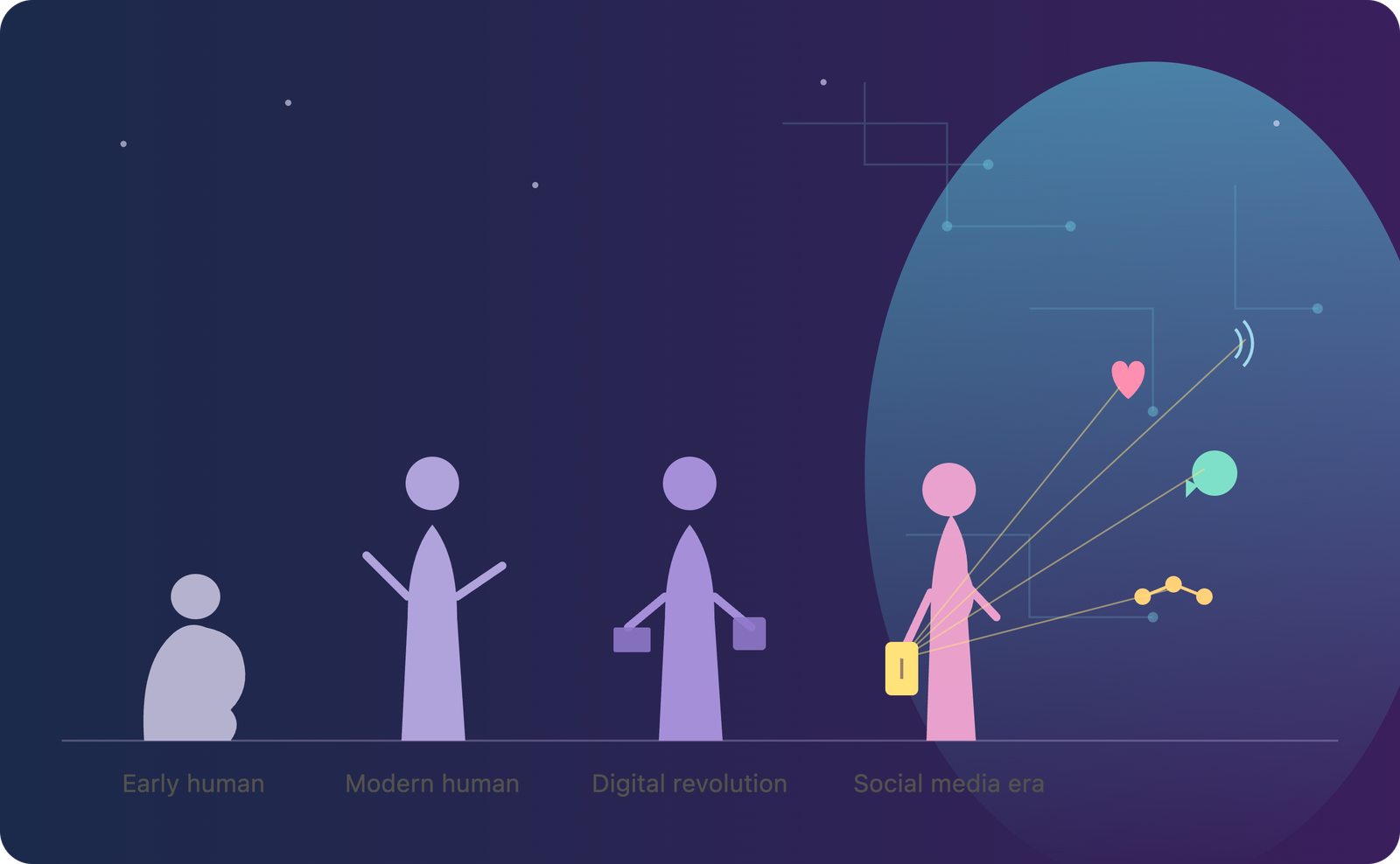
India, the youngest nation in the world, is evolving through technological and digital revolutions, alongside a growing adoption of global culture. It is a simple yet methodical process — each generation stays in sync with its social milieu and continues to achieve major milestones that shape society and national development.
It is not difficult to understand how the evolution of citizens is tied to a country's growth. But it is equally ironic that a country's growth may not be reflected equally in the growth of all its citizens. Such disparities are especially visible in a nation with high social and geographical diversity like India. With 65% of its population under the age of 35, India is the youngest nation in the world, making its young population the primary driver of future evolution. At the same time, India has a demographic dividend window of 35 years, making it crucial to ensure that this demographic potential is fully utilised.
It is also important to note that past social issues remain prevalent in society, often in more pronounced forms. This is particularly true in the age of social media and AI, where disinformation and fake news can spread with minimal effort — often gaining disproportionate traction due to their viral and sensational nature.
Growth Potential
A society with high growth potential can never truly be progressive if its adaptiveness to new challenges remains uncertain. History shows that every fast-paced nation has had a highly adaptive society, willing to experiment without hesitation — a phenomenon closely tied to the golden eras of the US and European nations. India is on the verge of achieving unbounded growth and technological advancement, but this cannot be ensured by policy push or government support alone. It requires a holistic approach — one built on high citizen trust in governance and highly efficient governance practices that encourage even wrongdoers to choose the path of growth and contribute to national development.
Generational Evolution
The modern era spans 7 to 8 generations, with each decade representing a new one. If social assimilation remains weak, every generation risks developing a superiority complex, dismissing others as inferior. This dynamic becomes even more complex in an AI- and social-media-driven world, where negative influences tend to dominate over positive ones.
Despite India's modernisation and globalisation, the responsibility still lies with us to nurture effective social bonds and continue the path that has defined India from ancient to modern times. The future of India lies with its citizens — and therefore, its growth cannot be singular; it must be collective.
No comments yet.